Day of Atonement
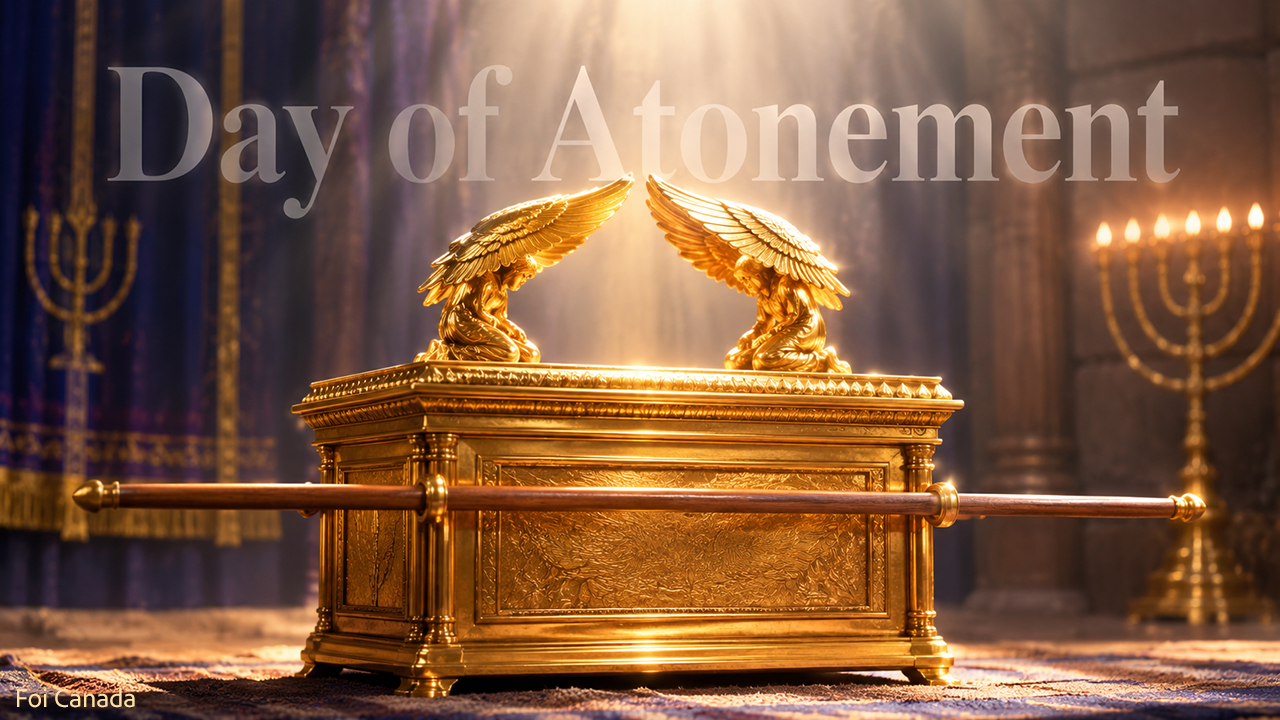
The Day of Atonement. In Hebrew, it is Yom Kippur. The holiest day in the Jewish calendar. The last of the Days of Awe, the high holy days, which begin with Rosh Hashanah, the Jewish New Year.
What is Atonement? We evangelicals often like to describe it as At-one-ment, mankind being made again at one with God. Although a bit oversimplified, I kind of like that definition.
One day a year. We can read about it in Leviticus. The High Priest enters into the Holy of Holies, the place behind the veil of the temple where sits the Ark of the Covenant, representing the presence of God. It must be the High Priest who enters here. He must go alone. He goes to present a sacrifice, to atone for the sins of the people, the sins they have committed against God in the past year.
He wore white linen. No fancy robes with bells announcing his presence and every move, as in other holy days. This was not a time for celebration. There is nothing to celebrate about sin. There was work to do.
This work wasn’t pretty. It wasn’t meant to be. There is nothing pretty about sin. This was a blood sacrifice that was being offered. Scripture tells us life is in the blood. Romans tells us the wages of sin is death. The price for man’s sin had to be paid. We would expect no less from a holy, just, and righteous God. Lifeblood had to be shed.
This process was a covering for sin. That’s all it was. All it would be, until Someone would come take sin away completely. Scripture tells us it is impossible for the blood of bulls and goats to take away sin. They could only cover sin. Like the veil of the temple, covering the Holy of Holies. Like the kippah, covering the head of observant Jews, at once both showing a respect and reverence for God we evangelicals could sometimes learn from, while at the same time being another item separating them from Him. So many coverings! Oh, that someone would come and somehow offer a perfect sacrifice, taking the need for all these coverings away.
Christ made that perfect sacrifice, Himself once offered, to be our atoning sacrifice for sin.. “It is finished!” He cried. His own lifeblood was shed. There was no more need for sacrifice. The veil of the temple was rent in two, and now we all would have access into the Holy of Holies, the very presence of God.
And yet, the Jewish people could not see that this suffering servant, Jesus, was their conquering Messiah. Their sacrifices continued, Soon, their temple would be destroyed, just as Jesus had said. Not one stone would be left upon another, And yet, the Jewish celebration of the Day of Atonement continued. Without the sacrifices, they still fasted, they still prayed, they still forgave and sought forgiveness. They still do this to this day.
I find this quite profound. Somewhere, somehow, on some level, do they realize? Do they realize atonement can be made without animal sacrifice? That atonement can be made without the physical temple? On some level, do they know that relationship with God goes much deeper than what rituals we can do physically? Some professing Christians would do well to learn this lesson as well.
There remains one more veil, one last covering to be lifted. When that final veil is lifted, the veil placed over the eyes of the house of Israel so that we Gentiles would have opportunity to come in, as in Romans 11, they will see Him whom they have pierced. They will recognize Him. They will mourn for Him, as one mourns for an only son. They will on that day be made at one with God, as we have been through Christ. The need for the Day of Atonement will then be complete.